
April 10, 2026 · 5:07 PM PDT · Off the Coast of San Diego, California
KEY STATS
- ~10 Days in Space
- 252,760 miles — Max Distance from Earth (record)
- 694,481 miles — Total Miles Traveled
- 4,070 miles — Closest Approach to Lunar Surface
- 50+ Years Since Last Crewed Lunar Mission
On April 10, 2026, NASA’s Artemis II mission reached its triumphant conclusion as the Orion spacecraft — christened Integrity by its crew — splashed down in the Pacific Ocean off the coast of San Diego, California. The four astronauts aboard were quickly declared “four crew green,” meaning all were safe and healthy, after what NASA Administrator Jared Isaacman described as a “perfect mission.”
It was a moment 50 years in the making. The last time humans had ventured anywhere near the Moon was during the Apollo 17 mission in December 1972. Now, in 2026, that chapter of human exploration has been reopened — and this time, the goal is to stay.
The Crew Behind the Mission
Artemis II carried four astronauts, making it not just a technological milestone but a deeply human one. The crew had been training together since their selection in April 2023 — three full years of preparation for nine days in deep space.
| Role | Name | Agency |
|---|---|---|
| Commander | Reid Wiseman | NASA |
| Pilot | Victor Glover | NASA |
| Mission Specialist | Christina Koch | NASA |
| Mission Specialist | Jeremy Hansen | Canadian Space Agency |
Together, they represented NASA’s international commitment to space exploration — with Hansen becoming the first Canadian to travel to lunar distance. During the mission, the crew documented their journey obsessively, sharing photos from vantage points no human had ever occupied before.
From Liftoff to Splashdown: A Timeline
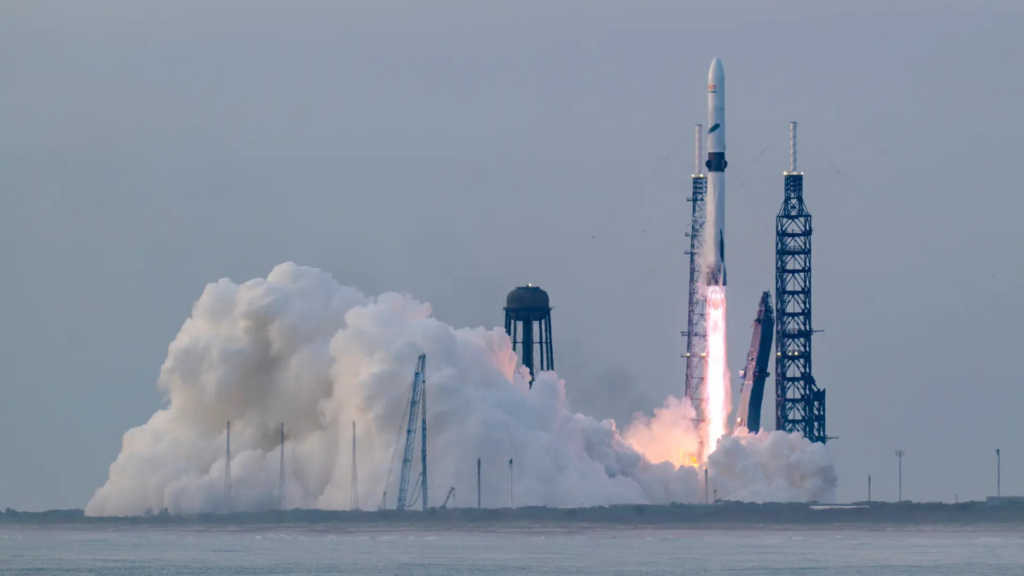
The mission launched from NASA’s Kennedy Space Center in Florida aboard the Space Launch System (SLS) rocket on April 1, 2026, at 6:35 PM EDT. What followed was nine days of careful systems testing, historic firsts, and moments of raw human emotion.
April 1 · 6:35 PM EDT Artemis II lifts off from Kennedy Space Center aboard the SLS rocket. This marks the first crewed flight of both the SLS and the Orion spacecraft.
April 4–5 Mission specialists conduct systems evaluations in deep space, testing Orion’s life-support, propulsion, power, thermal, and navigation systems with humans aboard for the first time.
April 6 · Lunar Flyby The crew completes a historic lunar flyby — humanity’s first crewed visit to the Moon’s vicinity in over 50 years. They reached a maximum distance of 252,760 miles from Earth and identified and proposed names for two previously uncatalogued craters on the lunar surface.
April 6 · Emotional Tribute Commander Wiseman proposes naming one newly discovered crater after his late wife, Carroll Wiseman, who passed away from cancer in 2020.
April 6 · Solar Eclipse The crew witnesses a total solar eclipse from space — a perspective no human had ever held before.
April 7, Orion exits the lunar sphere of influence and begins the journey back to Earth, approaching at 147,337 miles out on the final day.
April 10 · 5:07 PM PDT Splashdown. Orion touches down in the Pacific Ocean off San Diego. All four crew members report “green” — safe and healthy. NASA calls it a “perfect mission.”
How the Spacecraft Came Home
Reentry was always going to be the tensest part. The Orion capsule, traveling at a maximum velocity of roughly 24,661 miles per hour, had to survive temperatures of around 3,000 degrees Fahrenheit as it punched through Earth’s atmosphere.
About 42 minutes before splashdown, Orion’s service module separated, exposing the heat shield. The capsule then reoriented so its heat shield faced forward. As it descended through roughly 400,000 feet, a six-minute communications blackout set in — an expected, carefully planned window during which plasma forms around the capsule and cuts off all radio signals. For those six minutes, the crew was truly alone.
After emerging from the blackout, Orion deployed its drogue parachutes near 22,000 feet, then unfurled its three main parachutes around 6,000 feet, slowing the capsule from hypersonic speeds to a survivable 20 mph at splashdown. Crews aboard the USS John P. Murtha — supported by Navy MH-60 Seahawk helicopters and a fleet of recovery divers — were standing by.
“These were the ambassadors to the stars that we sent out there. I can’t imagine a better crew. It was a perfect mission.” — Jared Isaacman, NASA Administrator
Re-entry & Splashdown Conditions
- Splashdown Time: 5:07 PM PDT / 8:07 PM EDT, April 10, 2026
- Location: Pacific Ocean off the coast of San Diego, CA
- Entry Speed: ~24,661 mph (max)
- Heat Shield Temperature: ~3,000°F during peak reentry
- Crew G-Force: Up to 3.9 Gs (nominal profile)
- Recovery Ship: USS John P. Murtha
- Communications Blackout: ~6 minutes at peak heating
- Wave Height Limit: Below 6 feet (1.8 m)
- Wind Limit: Under 28.7 mph (46 km/h)
A Historic First in More Ways Than One
The numbers alone tell a remarkable story. The crew traveled a total of 694,481 miles from launch to splashdown, reaching a record distance of 252,760 miles from Earth — farther than any human in history. The mission also marked the first time since the Apollo–Soyuz Test Project in 1975 that a crewed NASA spacecraft was recovered by the U.S. Navy.
Distance from Earth — Artemis II vs. Previous Missions
| Mission | Max Distance from Earth |
|---|---|
| Artemis II (2026) | 252,760 mi (record) |
| Apollo 13 (1970) | ~248,655 mi |
| Apollo 17 (1972) | ~234,000 mi |
| Apollo 8 (1968) | ~229,000 mi |
| ISS (Low Earth Orbit) | ~250 mi |
Artemis II vs. Apollo: A Side-by-Side Look
It’s impossible to discuss Artemis II without drawing comparisons to the Apollo program. The missions share DNA — and deliberate design choices — but differ in scope, ambition, and technological sophistication.
| Category | Apollo 8 (1968) | Apollo 17 (1972) | Artemis II (2026) |
|---|---|---|---|
| Mission Type | Crewed lunar orbit | Crewed lunar landing | Crewed lunar flyby / test flight |
| Crew Size | 3 | 3 | 4 (incl. 1 Canadian) |
| Duration | ~6 days | ~12 days | ~10 days |
| Max Distance from Earth | ~229,000 mi | ~234,000 mi | 252,760 mi (record) |
| Rocket | Saturn V | Saturn V | Space Launch System (SLS) |
| Capsule | Apollo Command Module | Apollo Command Module | Orion (“Integrity”) |
| Recovery Ship | USS Yorktown | USS Ticonderoga | USS John P. Murtha |
| Lunar Landing | No | Yes | No (test flight) |
What This Mission Actually Tested
Artemis II was not a joyride. It was, above all, a rigorous engineering test — the first time the Orion spacecraft carried humans, and therefore the first opportunity to evaluate dozens of critical systems in a real deep-space environment.
| System | What Was Tested | Significance for Artemis III |
|---|---|---|
| Life Support | Air, water, temperature regulation with crew aboard | Must work flawlessly for 30-day lunar surface missions |
| Heat Shield (Avcoat) | Performance during high-speed reentry at 24,661 mph | Data will inform redesign for Artemis III |
| Navigation & Communications | Tested at lunar distances (~239,000 mi signal delay) | Critical for autonomous crew operations near the Moon |
| Propulsion | Series of trajectory correction burns; fuel consumption | Mission consumed less than half the ESM fuel — a strong result |
| Crew Habitability | Long-duration living quarters, ergonomics, crew interfaces | Informs cabin design and crew comfort for lunar landings |
| Parachute System | Full deployment sequence from 22,000 ft to splashdown | First real-world crew validation |
One item that will require scrutiny is the heat shield. During the post-splashdown press conference, Orion Program Manager Howard Hu confirmed that inspection teams — including two heat shield experts who boarded the recovery ship immediately — were already gathering imagery and data on the shield’s performance. NASA had already identified heat shield erosion concerns following Artemis I, and design changes are planned for Artemis III.
“We gathered a lot of data. There’ll be more assessments to get on the ship. We already have two of our heat shield experts on board the ship.” — Howard Hu, NASA Orion Program Manager
A Mission Soaked in Human Moments
Beyond the engineering, Artemis II produced moments that will be talked about for decades. During the lunar flyby, the crew photographed never-before-seen areas of the Moon’s surface and witnessed a total solar eclipse from space — something no human had ever experienced before.
Commander Wiseman’s proposal to name a newly identified crater after his late wife Carroll — who died of cancer in 2020 — was a moment that moved mission controllers and viewers worldwide. The naming of a second crater added another layer to the crew’s personal stamp on their historic journey.
Shortly after splashdown, mission controllers named their favorite moments at the post-splashdown press conference. Flight Director Rick Henfling chose the crater naming as his. Orion Program Manager Howard Hu chose the parachutes’ deployment: “I was chanting ‘go, go, go’ by myself,” he said. “Objective No. 1 is ‘get the crew home.'”
What Comes Next: The Road to Artemis III
NASA Administrator Isaacman was direct in framing what Artemis II represents: not a capstone, but a starting point. “We are back in the business of sending astronauts to the Moon,” he said, noting that the mission is not a “once-in-a-lifetime” event but rather a “beginning” that paves the way for the U.S. to send more missions to the Moon and build a base there.
Artemis III — the mission that will actually land astronauts on the Moon’s surface — is now one significant step closer to reality. Data from the Artemis II test flight will directly inform the hardware and procedures used for that landing, including heat shield redesigns and crew system refinements.
The Artemis Program Roadmap
- Artemis I (2022): Uncrewed test flight of SLS + Orion around the Moon. Successful.
- Artemis II (2026): First crewed test flight. Lunar flyby with 4 astronauts. Successful.
- Artemis III (TBD): First crewed lunar landing since Apollo 17. Will include the first woman and first person of color on the Moon’s surface.
- Artemis Base Camp: Long-term goal — a sustainable lunar base enabling months-long stays and preparation for Mars.
The Lunar Gateway — a planned space station in lunar orbit — was cancelled in March 2026. However, NASA’s core mission remains intact: return humans to the Moon, establish a base, and use that experience as a stepping stone for crewed Mars missions.
Why This Matters Beyond Space Exploration
It would be easy to view Artemis II purely through the lens of national achievement or scientific curiosity. But the mission carries implications that stretch well beyond NASA’s budget or the careers of four astronauts.
Every data point collected during this flight — from heat shield performance to how the human body responds to deep-space radiation — feeds directly into the infrastructure required for sustained human presence beyond Earth. The commercial space industry, private lunar missions, and even the long-term vision of off-Earth resource extraction all depend on the foundational engineering work that flights like Artemis II provide.
NASA’s ability to bring four humans safely to the vicinity of the Moon and return them to Earth — after more than half a century’s gap — is a proof of concept for a species that is slowly, carefully, learning to become multi-planetary.
“America is back in the business of sending astronauts to the Moon and bringing them home safely.” — Jared Isaacman, NASA Administrator
Further Reading & Official Sources
- NASA Official Artemis II Mission Page: https://www.nasa.gov/missions/artemis/artemis-2/
- NASA Artemis II Splashdown & Return Photo Gallery: https://www.nasa.gov/gallery/artemis-ii-splashdown-and-return/
- NASA FAQ — Everything About Artemis II: https://www.nasa.gov/missions/nasa-answers-your-most-pressing-artemis-ii-questions/
- TechCrunch Artemis II Coverage: https://techcrunch.com/2026/04/10/nasa-artemis-ii-landing-pacific-ocean-splash-down/
- Wikipedia — Artemis II (Full Technical Overview): https://en.wikipedia.org/wiki/Artemis_II
- NASA Lunar Flyby Photos: https://www.nasa.gov/gallery/lunar-flyby/
Article compiled from official NASA mission data, TechCrunch, Wikipedia, Al Jazeera, CNN, and NewsNation. All information is current as of April 10–11, 2026.